In recent years, HiRes audio has become one of the most talked-about upgrades in the music streaming industry. Music enthusiasts constantly chase clearer details, richer tones, and studio-level sound quality when enjoying Hi Res music, pushing streaming platforms to upgrade their official audio standards. As the world’s largest music streaming service, Spotify finally introduced high-fidelity lossless playback for Premium users, sparking endless discussions about real Hi Res sound performance. Many users wonder whether Spotify’s so-called HiRes feature is a genuine quality upgrade or just marketing hype, and what kind of HiRes audio player setup is actually required to tell the difference.
In this in-depth guide, we will objectively analyze Spotify Premium’s HiRes audio function, explain its actual sound improvement, list compatible device requirements, and give a clear verdict on whether this feature is truly worth using in 2026.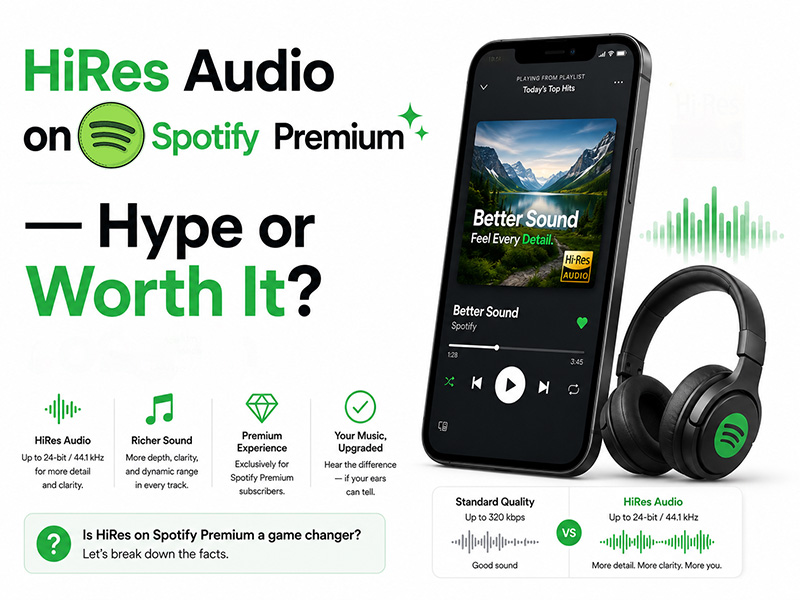
What Exactly is HiRes Audio
HiRes audio (High-Resolution Audio) refers to digital music files that exceed the standard CD quality of 16-bit/44.1kHz, typically offering 24-bit depth and 96kHz+ sample rates. This means:
- More dynamic range: Captures subtle details between the quietest and loudest sounds
- Finer sonic details: Preserves delicate reverb tails, vocal nuances, and instrument textures
- Enhanced spatial imaging: Creates a more immersive soundstage with better separation between instruments
True Hi Res music delivers studio-quality sound, but not all “lossless” options qualify as HiRes. Spotify currently offers 24-bit/44.1kHz FLAC rather than full HiRes, a key distinction for audiophiles.
Spotify Premium‘s HiRes Journey: What You Need to Know
After years of anticipation, Spotify finally rolled out lossless audio to Premium subscribers in September 2025. Many users mistake this new update for full HiRes audio, but there are clear technical differences you must understand:
- Standard Premium (320kbps Ogg Vorbis): Compressed audio format, suitable for daily casual listening, small file size and low data consumption
- Spotify HiFi Lossless: 1,411kbps+ FLAC format, 24-bit depth, 44.1kHz sample rate, zero compression loss
- True Full HiRes Standard: 24-bit/96kHz or higher sample rate, the professional standard for authentic Hi Res music
Spotify’s current offering is technically lossless CD-quality rather than full professional HiRes audio, though it is still a massive upgrade compared to traditional compressed streaming quality. If you’re new to this feature and want to grasp the core basics first, check out our detailed guide: What is lossless spotify, where we fully break down Spotify’s lossless mechanism, core advantages.
How to Enable HiRes Audio on Spotify Premium
Activating lossless playback is straightforward:
- Open the Spotify app
- Go to Settings → Media Quality
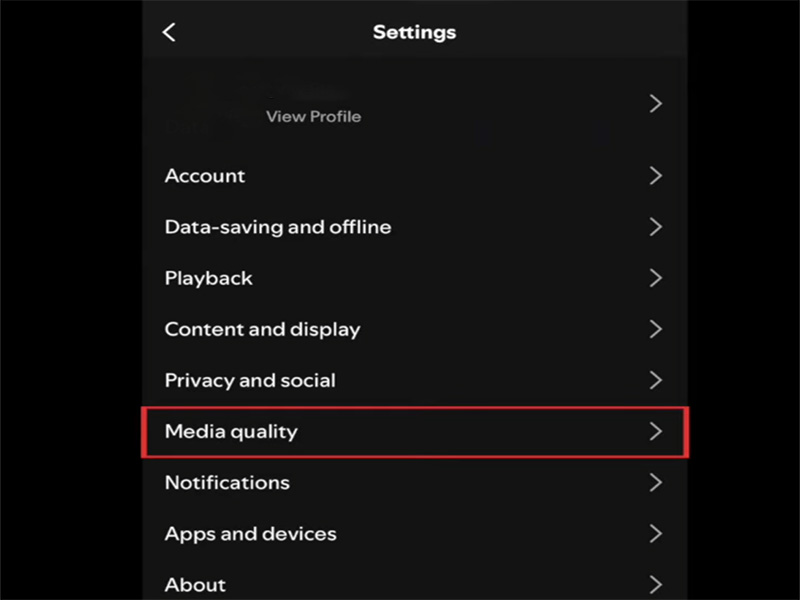
- Under “Streaming Quality,” select Lossless
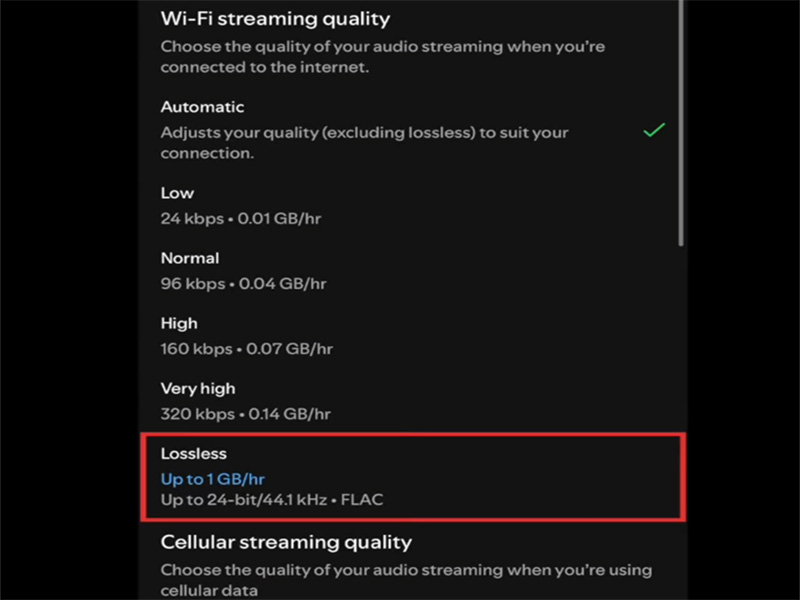
- For downloads, ensure “Download Quality” is set to Lossless
Note: The Spotify web player currently caps at 256kbps; lossless is only available on the desktop and mobile apps.
Is HiRes Audio on Spotify Premium Actually Worth It
1. Your Listening Equipment
The biggest determinant of value is your hardware chain:
- Basic earbuds/headphones: You’ll likely notice little to no difference from 320kbps
- Mid-range audio gear: Subtle improvements in clarity and detail become apparent
- High-end headphones/speakers + dedicated DAC: Full benefits of lossless audio emerge
A quality HiRes audio player with a robust DAC is essential for unlocking Hi Res sound potential.
2. Music Genre & Production Quality
Certain genres benefit more from lossless:
- Classical/jazz: Complex arrangements and acoustic instruments reveal more detail
- Live recordings: Preserves spatial characteristics and audience ambiance
- Well-mastered tracks: A high-quality recording at 320kbps often outperforms a poorly mastered “HiRes” track
3. Your Listening Environment
- Noisy environments: Compression artifacts are masked by ambient noise
- Quiet, dedicated listening spaces: Subtle details in lossless audio become noticeable
4. Data Usage Considerations
Lossless streaming uses ~4x more data than 320kbps (40–60MB/hour vs. 12–15MB/hour), which is important for mobile data plans.
Best HiRes Audio Player Options for Spotify Listening
To maximize every bit of Hi Res sound from Spotify Premium, a qualified HiRes audio player or decoding device is essential. Here are the most practical options:
- Portable HiRes players: FiiO, Astell&Kern, Sony Walkman series, supporting Spotify Connect and lossless decoding
- Mobile + external DAC: Bypass the phone’s built-in low-quality decoder to restore pure Hi Res music details
- Desktop audio setup: Professional sound cards and speakers for studio-level listening experience
The Verdict: Hype or Worth It
- For casual listeners with standard earbuds and noisy daily routines: Not worth the hype. 320kbps is indistinguishable for most casual use cases.
- For enthusiasts with quality gear: Absolutely worth it. Lossless audio reveals new layers in your favorite tracks, enhancing long listening sessions.
- For audiophiles chasing true HiRes: Partial worth. While Spotify’s 24-bit/44.1kHz is a significant upgrade, it’s not full HiRes. Consider Tidal HiFi or Qobuz for complete HiRes audio support.
Final Thoughts: Making the Most of Spotify‘s HiRes Offering
- Upgrade your headphones first: Quality cans deliver more noticeable improvements than lossless alone
- Test with your favorite tracks: Compare lossless vs. 320kbps on songs you know intimately
- Use lossless strategically: Reserve it for dedicated listening sessions, not daily commutes
- Check your data plan: Ensure you have sufficient bandwidth for lossless streaming
HiRes audio on Spotify Premium is a welcome upgrade, but its value depends entirely on your setup and listening habits. For most users, it’s a nice bonus rather than a must-have feature; but for music lovers with the right gear, it’s a game-changer that brings you closer to the artist’s original vision.