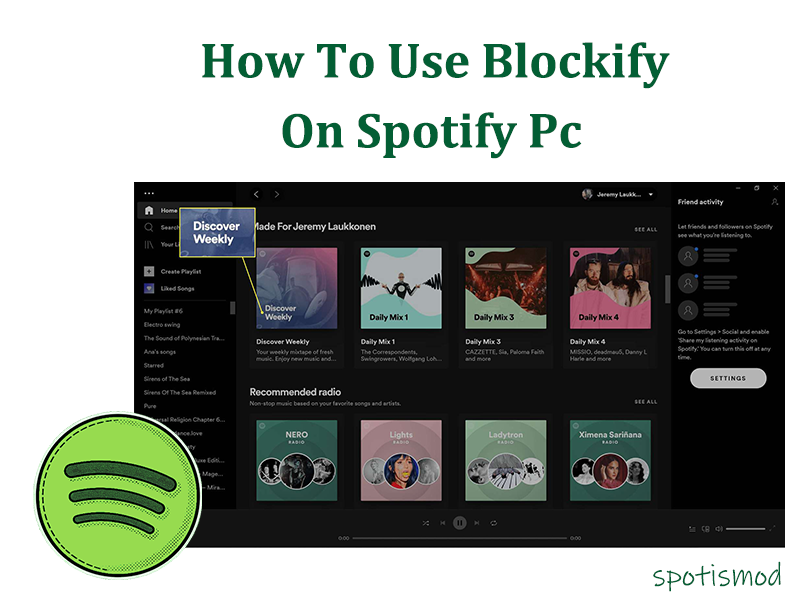
If you train in a clear way, your Spotify Discover Weekly playlist can change dramatically within a month. The key is simple: Spotify learns your playback, skip, save, and replay history. If you consciously guide these actions, your playlist will become more precise over time.
Below is a detailed 30-day plan, focusing on actual listening behavior.

1. Understand how Discover Weekly works (Day 1–2)
Spotify’s Discover playlists are generated based on your listening habits, not randomly recommended. Over the past two days, our goal has been to understand which factors truly influence your listening habits so you can improve the recommendations in Discover Weekly and build better long-term music suggestions.
It mainly pays attention to:
- Songs you play from start to finish
- Songs you skip within the first seconds
- Tracks you save or “like”
- Artists you return to again and again
- The overall style of playlists you spend time on
Even the smallest actions are crucial. Skipping over a section quickly will produce a strong signal, while listening to it completely again will produce a different signal. Over time, these habits will shape your weekly “discovery” recommendations.
At this stage, you haven’t made any changes yet. You’re just beginning to realize that every listening choice you make builds your personal profile.
2. Clean your listening habits (Day 3–5)
This step is about making your listening data clearer so the system understands your real taste faster.
Do a quick reset of your daily behavior:
- Skip songs you don’t like early instead of letting them play to the end
- Avoid using random playlists that don’t match your mood or style
- Stop background listening where you are not really paying attention
- Try not to jump between very different genres in one session
In addition, pay attention to the content you are replaying. If you feel a song is “just so-so,” don’t play it on repeat. Save the chance to replay songs you really like.
The purpose of this is simple: to reduce clutter and make your listening habits easier to understand and more consistent.
3. Build a “core taste” playlist (Day 6–10)
This playlist is the base signal for how Spotify understands your taste. It should be small, clear, and consistent.
- Add only songs you truly enjoy and would replay
- Focus on one main style instead of mixing many genres
- Include artists you already trust and listen to often
- Remove tracks that feel “okay” but not strong favorites
Use this playlist frequently; don’t just use it once. Play it frequently in your daily life so that Spotify can clearly understand your true preferences.
4. Actively train Spotify daily (Day 11–15)
The current goal is to make your listening habits more consistent so that Spotify can recognize clear patterns.
Try to keep a simple daily routine:
- Play your core playlist for around 30–60 minutes each day
- Save a few songs you genuinely like instead of saving everything
- Skip songs quickly when they don’t fit your taste
- Revisit songs you already saved or enjoyed before
What matters is not how much music you listen to, but whether your listening habits are clear. When your choices become more consistent, Spotify can better understand your preferences and adjust its recommendations in a more stable direction.
5. Explore new music in a controlled way (Day 16–20)
At this stage, you still want fresh music, but the goal is to keep it focused so your listening profile stays clear.
Try a simple structure:
- Pick one artist you already like and explore only their related artists
- Use genre-based stations, but limit each session to a short time
- Add songs only if they clearly match your core playlist style
- Avoid jumping between very different genres in the same day
The idea is not to discover as much new music as possible, but to select new music based on your existing musical preferences. This helps Spotify understand what “new music that fits your style” means, thus making future recommendations more accurate.
6. Use radio and daily mixes (Day 21–24)
At this stage, you want Spotify to understand your music taste more directly. Tools like Song Radio and Daily Mix can help because they are built based on a song’s pattern or your recent listening habits. Many users who search for Spotify APK weekly also pay close attention to these personalized playlists, since using them consistently can give Spotify more useful listening signals and improve future recommendations.
First, choose a song you like and turn on its radio. This allows you to generate a series of similar songs. Pay attention to which songs suit your style and which don’t. Save the ones you like, and don’t wait too long for the others.
With Daily Mix, you can treat each playlist as a snapshot of your current musical taste. Listen to the songs normally once, and only keep those that truly fit the core direction of your playlist.
The goal here is simple: to provide Spotify with clearer signals by responding quickly and consistently to its recommendations.
7. Focus on repeat listening (Day 25–27)
At this stage, repeating playback becomes one of the strongest signals you can send. At this point, Spotify already has a basic understanding of your preferences. What it needs now is confirmation that what you really want to hear over and over again.
Try to focus on a smaller set of tracks during these days:
- Replay your favorite songs instead of constantly switching to new ones
- Let songs finish fully instead of skipping halfway
- Pick a few “top tracks” and return to them across different times of the day
- Listen in different moods to strengthen the pattern
This repetitive behavior helps Spotify not only understand what you like once, but also what you consistently like over a long period of time.
In addition, it is also helpful to avoid getting too distracted at this stage. If you switch between too many different music styles, the signal will weaken. A more compact listening cycle can provide clearer guidance.
A few days later, you should notice that Spotify’s recommendations are more stable, with fewer random songs appearing in your weekly playlists and more familiar styles.
8. Check your Discover Weekly carefully (Day 28–30)
At this stage, you mainly want to see what changes occur after listening to it continuously for several weeks. Open Spotify’s “Discover” playlist and listen to it slowly, instead of just letting it play in the background.
Pay attention to a few simple things:
- Do the songs feel closer to your main playlist now?
- Are there fewer tracks that feel totally unrelated?
- Do you notice repeat artists or similar styles showing up more often?
If most of the playlist still sounds a bit off, don’t worry. This usually means that your listening signal is still relatively messy. In this case, reorganize your core playlist, reduce random listening, and give spotify weekly more consistent listening patterns so it can better understand your music preferences over time.
If you start hearing more familiar styles and the transitions between songs become smoother, it means your listening habits are working and the algorithm is adjusting in the right direction.
Final thought
The key to improving the weekly recommendation experience lies not in techniques, but in consistency. Once your listening habits become clear and consistent, Spotify can recommend songs to you in a better way.
If you can stay focused and make your listening simple and conscious, you will see noticeable changes after 30 days.