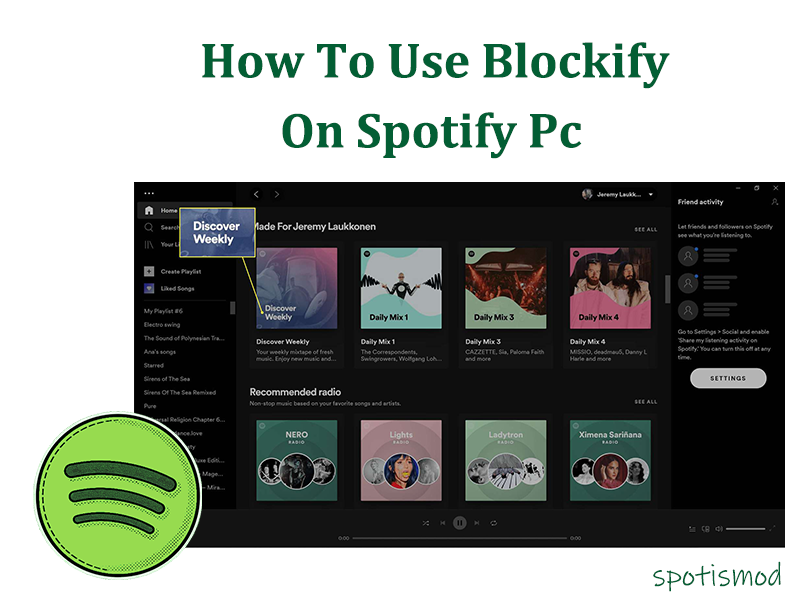
Many users try using ad blockers on Spotify, including tools like blockify spotify ad blocker, but quickly find that ads still play. This is neither accidental nor a bug. Spotify’s design makes traditional ad-blocking methods very difficult to work with, especially compared to regular websites like blogs or news pages.
Do Ad Blockers Work on Spotify at All
In reality, ad blockers are not truly stable or fully effective on Spotify. Some users have reported that ads temporarily disappear, but this effect is usually limited, unstable, and short-lived.
On the surface, a reduction in the number of ads or smoother playback may seem like signs that the ad blocker is working. In reality, this is usually because Spotify is testing different ad delivery volumes, reducing ad delivery during certain sessions, or delaying ad delivery based on user activity. These changes can easily be mistaken for successful ad blocking.
Another reason for inconsistent results is platform differences. On web players, ad blockers might block visual elements such as banner ads or promotional cards. This gives the illusion that the ads have disappeared, even though the audio ads are still playing as usual. This is much less common on desktop and mobile applications because browser-based interceptors have limited coverage outside the browser.
Furthermore, it’s worth noting that Spotify regularly updates its ad delivery methods. Even if an interceptor seems to work at some point, it usually fails after an application update, server-side changes, or the adoption of a new ad delivery method. This is why many reports of effective solutions quickly become outdated.
In general, ad blockers may affect certain parts of the Spotify interface under specific circumstances, but they cannot reliably remove audio ads. Any effect is usually temporary and users cannot rely on it in the long term.
Why Spotify Ads Are Hard to Block
The main reason why Spotify ads are difficult to block is that their delivery method is completely different from traditional online ads. On most websites, ads come from separate ad networks and are loaded independently of the main content. Ad blockers are designed to identify and block these external requests. But Spotify operates very differently.
On Spotify, audio ads are deeply integrated with the streaming system. Technically, ads are delivered in the same way as songs. The player doesn’t treat them as optional add-ons but as part of the playback queue. This makes it difficult for ad blockers to separate ads from the music without interrupting playback.
Another reason is server-side ad insertion. Spotify typically decides on its servers when and which ads to play before the audio reaches your device. When the audio stream arrives at your device, it already contains advertising content. Since there is no obvious ad content loaded separately on your device, ad blockers have almost no targets to target.
Spotify also uses encrypted streaming and frequently changing delivery methods. These updates are designed to improve performance and stability while also preventing interference from third-party tools. Even if ad blockers find a way to temporarily block or skip ads, Spotify updates usually quickly patch the loophole.
In addition, Spotify proactively monitors for abnormal playback behavior. If the system detects repeated interruptions or blocked playback segments, it may pause playback, force a reload, or display an error message. This is why some users encounter problems such as muting, skipping tracks, or app crashes when trying to block ads.
All of this means that blocking Spotify ads is more than just hiding content on the screen. It requires disrupting the core streaming playback process, which most ad blockers are not designed for and cannot do safely or reliably.
Do Ad Blockers Work on Spotify Web Player
On the Spotify web player, ad blockers appear to work better than on the desktop or mobile app, but the effect is limited. Most ad blockers can only block elements that behave like standard web ads, such as banner ads, pop-ups, or sponsored content on the page.
These visual ads are easier to hide because they load as separate page elements. Blocking them might make the interface look cleaner, but it won’t change how Spotify handles audio playback.
Audio ads on the Spotify web page are streamed through the same streaming system as the songs. From the perspective of a web player, the advertisement is part of the audio session, not a separate ad file. Therefore, ad blockers cannot safely remove them without interrupting playback.
When ad blockers attempt to block audio requests, Spotify typically stops playing music, refreshes the page, or displays a playback error. In some cases, the player may refuse to load until the blocker is disabled.
Spotify also detects unusual playback behavior on web players. If ads are repeatedly skipped or blocked, Spotify may restrict playback or force a page reload. This is why some users report that ad blockers work briefly on the Spotify web version but stop working after a few uses.
In reality, ad blockers on Spotify’s web player can reduce visual distractions, but rarely eliminate audio ads completely. The core content of the ad experience remains unchanged, and excessive blocking often leads to player instability rather than achieving an ad-free experience.
Do Ad Blockers Work on the Spotify App
On Spotify’s desktop and mobile apps, ad blockers are almost ineffective. This is because the Spotify app is not based on a browser environment. Most ad blockers are designed for web browsers, where ads are loaded as separate elements that can be filtered or hidden.
The Spotify app controls its own network requests, audio playback, and user interface. Ads are served through the same system as music tracks, making it difficult for external tools to isolate and block them. From the app’s perspective, ads are simply another type of audio content.
Even system-level ad blockers struggle to handle the Spotify app. When these tools attempt to block ad-related connections, the app often fails to load songs, pauses playback, or displays connection errors. In many cases, blocking ads will also block the music itself.
Another reason why ad blockers fail on the Spotify app is frequent updates. Spotify regularly changes how ads are served and how the app communicates with its servers. Any unofficial workarounds tend to become ineffective quickly after an update, especially on mobile devices.
Some tools claim to completely remove ads from the Spotify app, including so-called spotify ad blocker android solutions, but they are often unstable or insecure. These tools may require deep system access, modification of application files, or use of outdated versions of Spotify. These methods often lead to crashes, account problems, or loss of functionality.
In fact, the Spotify app is one of the most difficult apps to block ads. Unlike the website, there is no clear boundary between content and ads in the Spotify app, which makes ad blockers very limited in their capabilities.
What Ad Blockers Work on Spotify
In fact, no ad blocker works perfectly reliably on Spotify. This is true across desktop apps, mobile apps, and web media players. The reason is not a lack of good ad blockers, but rather the way Spotify manages its ecosystem.
On the Spotify web player, some well-known browser ad blockers can hide visual elements like banner ads, sponsored content, or promotional cards. These blockers are effective because these elements behave similarly to standard web page content. However, this effect is limited to appearance. The audio ads continue to play through Spotify’s streaming system and continue as usual.
For audio ads, ad blockers face technical challenges. Spotify does not offer audio ads like other third-party requests, making them difficult to filter. Instead, ads are sent directly from Spotify’s servers and processed as part of the playback process. From the player’s perspective, both ads and songs are valid audio tracks. Blocking one usually means that both will be blocked.
Ad blockers are even less effective on desktop and mobile apps. These apps operate outside the browser environment where most ad blockers work. Because the Spotify app internally controls network requests, playback logic, and content verification, external ad blockers are largely ineffective. This is why claims about app-level ad blockers rarely stand the test of time.
Some online tools claim they can block Spotify ads by muting ads, skipping tracks, or modifying playback behavior. However, these solutions are often unstable, become ineffective after updates, or cause frequent playback errors. More importantly, they often rely on Spotify’s proactive monitoring and restriction methods.
In short, which ad blockers work on Spotify depends on how you define “works.” If the goal is to eliminate visual distractions on a web player, some blockers might be effective. However, if the goal is to completely block audio ads, there is currently no reliable, secure, and stable ad blocker that can achieve this across all Spotify platforms.
What Free Ad Blockers Work on Spotify
When you search online for free ad blockers for Spotify, you’ll find a lot of claims. Many apps, extensions, or tools claim to block ads on Spotify for free. However, the actual situation is quite different from what was advertised.
Most free ad blockers are designed for regular websites where ads are typically visible text or images from ad networks. Spotify ads, especially audio ads, are different. They are part of the music stream itself. When you listen using a free account, Spotify mixes ads into the audio along with how the song plays. This makes traditional ad blockers virtually ineffective.
On the Spotify web player, some free browser extensions can hide visual ads or remove banners and buttons promoting premium features. This makes the interface cleaner and less distracting. However, these tools cannot block audio ads played between songs. The main reason is that the audio stream still comes from Spotify’s servers, and extensions cannot separate the ads from the music without breaking the player.
Free ad blockers are even less effective for desktop and mobile apps. These apps cannot run in a browser, so browser extensions cannot block the content. Most free ad blockers work by filtering web traffic or blocking known ad server domains. Because Spotify delivers ads through the same channels as the songs, blocking these streams usually causes playback to stop completely.
Some community-developed tools claim to block Spotify audio ads for free. However, these tools are often unstable, stop working after platform updates, or rely on unofficial methods that may violate Spotify’s terms of service. They might work in the short term, but rarely in the long term. Many tools require complex setup steps, far exceeding simple installation steps, and their effectiveness is also unstable.
Currently, the only truly reliable way to remove Spotify ads is through Spotify’s official ad-free option. Free ad blockers might improve the visual experience or simplify parts of the interface, but none can completely and continuously block audio ads on the Spotify website or app without affecting playback.
Are There Any Ad Blockers That Work on Spotify
In reality, no ad blocker can function reliably and consistently on Spotify over the long term. This works for desktop applications, mobile applications, and even web page players. While some tools may work temporarily, they usually stop working after Spotify updates its system.
Spotify’s advertising system is deeply integrated with how music is played. The ads are not simply added above the song like website banner ads, but are played and streamed at set times as part of the listening session. From the platform’s perspective, ads and songs follow the same playback path.
Because of this design, ad blockers cannot safely remove ads without interfering with normal playback. When the blocker attempts to block an ad, Spotify may detect missing audio segments and take measures such as pausing playback, skipping tracks, or displaying a connection error.
Some browser extensions claim to work on the Spotify web version, but most of them simply hide the visual elements, and the audio ads usually continue to play. Other extensions rely on outdated technology, which Spotify will soon fix. This is why users often report that a blocker that worked yesterday is no longer working today.
Besides browsers, there are other tools that claim to completely block Spotify ads. These tools often modify app behavior or interfere with network traffic. Besides being unreliable, they can cause crashes, account problems, or playback failures. Spotify is actively detecting and addressing these methods.
The key issue is that the limiting factor is not the quality of the ad blocker, but rather the way Spotify is designed. As long as advertising remains a core component of streaming playback, third-party blockers cannot remain consistently reliable.
How to Block Spotify Songs Instead
While blocking ads on Spotify is difficult, controlling the music you listen to is much easier. Spotify offers built-in tools to block or reduce songs, artists, and music styles you don’t like. These tools work on various devices and are safe to use because they’re part of the Spotify system.
One of the simplest options is hiding songs. When you hide a song, Spotify learns that you don’t want to hear it again, especially in playlists and recommendations. Over time, this helps reduce the appearance of similar songs.
Spotify also allows you to block artists. Once you block an artist, their music will no longer appear in playlists, radio stations, or DJ recommendations. This is extremely useful if certain sounds or styles consistently interrupt your listening experience.
Another effective method is managing your favorite songs and playlists. Deleting songs you no longer like sends a clear signal to Spotify’s recommendation system. Skipping a song in advance has a similar effect, while letting a song play in its entirety increases the chances of hearing more similar songs.
You can also use features like playlist editing and enhanced controls. Creating your own playlists or following curated lists gives you more control over your music experience than simply relying on automatic recommendations. For users who listen to music while working or studying, this method is usually smoother and more predictable.
Finally, the importance of listening habits far exceeds most people’s imagination. Spotify closely monitors your recent listening behavior. If you skip a certain style or avoid a specific type of song for several consecutive days, the recommendations will be adjusted accordingly. This is a practical way to create a personalized music experience without having to bypass ads.
By focusing on controlling the songs and artists, rather than blocking ads, even the free version of Spotify can make your listening experience more personalized and reduce frustration.
Advice and Final Summary
If ad blockers don’t work on Spotify, it’s because Spotify integrates ads into its core content system, rather than as a separate element. This renders traditional ad-blocking methods ineffective on both web players and apps.
The most reliable way to avoid ads is to use Spotify as designed: either accept the ads in the free plan or choose the official ad-free version. To better control the listening experience, instead of fighting against the advertising system, it’s better to focus on blocking songs and optimizing recommendation settings.
Ad blockers don’t fail on Spotify because they are inadequate, but because Spotify’s technology is designed to resist ad blocking. Understanding this will help you set reasonable expectations and avoid using unsafe or unreliable tools.